
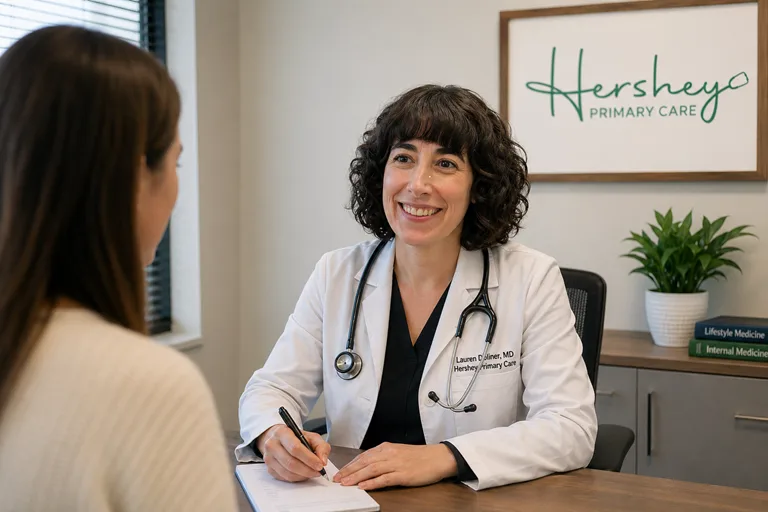
The best primary care doctor in Hershey, PA is one who offers timely access, enough time during visits, clear communication, and continuity over time.
For many patients, frustration with primary care comes not from the individual doctor, but from a system that limits time and access.
A different model, called direct primary care, is designed to address these gaps by improving availability, communication, and long-term care relationships.
Why Finding a “Good” Primary Care Doctor in Hershey Feels So Difficult
You are not just looking for credentials.
You are looking for someone who listens, explains, and is available when you need them.
But what you often find is:
- Long wait times for appointments
- Short visits once you are there
- Limited ability to reach your doctor afterward
It feels transactional instead of personal.
Patients often report:
“I felt rushed.”
“I didn’t get to ask everything.”
“I don’t even know who to call.”
These experiences are common and are largely driven by how most primary care practices are structured.
What Most People Don’t Realize About How Primary Care Works
Most primary care practices are built around insurance billing.
This typically requires:
- High patient volume
- Shorter visits
- Tight scheduling
A primary care physician may be responsible for thousands of patients.
Appointments are often limited to short visits, commonly under 20 minutes.
This limits how much time can be spent understanding a patient’s full health picture.
It also affects access:
- Schedules fill quickly
- Same-day visits are less available
- Communication outside visits is limited
The result is a reactive model of care rather than a proactive, preventive one.
What Actually Makes a Primary Care Doctor “Good”
A good primary care doctor is not defined by credentials alone.
It is defined by how care is delivered over time.
Time
Enough time to fully understand concerns and explain a plan.
Short visits increase the risk of missed details, especially for chronic conditions like high blood pressure, diabetes, and obesity.
Access
The ability to be seen when care is needed.
Delays in care can lead to worsening symptoms or unnecessary urgent care or emergency room visits.
Research has consistently shown that limited access to primary care is associated with higher use of emergency services for conditions that could have been treated earlier.
Continuity
Seeing the same physician over time.
Studies have shown that continuity with the same physician is associated with lower mortality, fewer hospitalizations, and fewer emergency department visits.
Communication
Clear explanations and the ability to ask questions.
Unanswered questions often lead to confusion and poor follow-through.
Prevention and guidance
Ongoing management of conditions like high blood pressure, high cholesterol, and weight.
Effective care requires follow-up and adjustment over time, not one-time visits.
A Different Approach: Direct Primary Care in Hershey
Direct primary care is a model in which patients pay a monthly membership fee for primary care services, without billing insurance for each visit.
At Hershey Primary Care, care is structured differently under the direction of Dr. Lauren Doliner, a board-certified Internal Medicine and Lifestyle Medicine physician.
This allows for:
Longer visits
Appointments are not rushed.
There is time to understand the full picture.
Same or next day access
Patients are typically seen when concerns arise.
Direct communication
Patients can contact their physician by phone, text, or email.
Questions can be addressed between visits instead of waiting for the next appointment.
Focus on prevention
Care emphasizes long-term management of chronic conditions and lifestyle factors.
This allows for more consistent progress over time.
Simplicity
No copays or visit-based billing.
Patients know the cost upfront.
Who This Approach Is a Good Fit For
This model is often a good fit for adults who:
- Want more time during visits
- Are managing chronic conditions
- Value direct access to their physician
- Prefer a focus on prevention and lifestyle medicine
- Feel frustrated with rushed or fragmented care
It is particularly well suited for patients who want a more continuous, relationship-based approach to their health.
FAQ
How do I know if a primary care doctor is actually good?
A good primary care doctor provides adequate time during visits, is accessible when needed, communicates clearly, and offers continuity over time. Patients should feel heard, understand their care plan, and be able to follow up easily with questions.
Is direct primary care worth it if I already have insurance?
Direct primary care can complement insurance by improving access, communication, and continuity of care. Insurance is still used for services like specialists, imaging, labs, prescriptions, and hospital care, while direct primary care focuses on day-to-day primary care needs.
Will I still be able to get labs, imaging, or referrals?
Yes. Patients in direct primary care can still obtain labs, imaging, and specialist referrals. The primary care physician helps coordinate these services and guide decision-making based on the patient’s needs.
What is the difference between direct primary care and traditional primary care?
Direct primary care is a model where patients pay a monthly membership fee for primary care services, and the practice does not bill insurance for each visit. This allows for longer appointments, easier access, and direct communication with the physician. Traditional primary care is structured around insurance billing, which often requires higher patient volume and shorter visits. The main difference is how care is delivered and accessed.
Why does it take so long to get a doctor’s appointment in traditional primary care offices?
In most traditional primary care practices, physicians care for a large number of patients and operate on tightly scheduled appointment slots. This leads to full schedules and limited availability for same-day or urgent visits. The delay is usually a function of system design, not individual effort.
Can a primary care doctor help with weight loss and lifestyle changes?
Yes. At Hershey Primary Care, Dr. Lauren Doliner is board-certified in Internal Medicine Lifestyle Medicine, allowing for a comprehensive approach to weight management.
This includes:
- Using labs to evaluate medical factors contributing to weight gain
- Addressing nutrition, physical activity, sleep, and stress
- Providing ongoing guidance and accountability
- Prescribing and monitoring medication options when appropriate
Effective weight loss requires a structured, long-term approach rather than a single intervention.
If you are looking for a different kind of primary care experience, one that feels more accessible, more personal, and more focused on your long-term health, the best next step is a simple conversation.
You can schedule a free 15 minute Zoom meet and greet to learn more about how Hershey Primary Care works, ask questions, and see if it feels like the right fit for you. https://calendly.com/hello-hersheyprimarycare/meet-and-greet
There is no pressure and no commitment. Just a chance to understand your options and decide what kind of care you want moving forward.
If your current care has felt rushed or difficult to access, it may be time to try something different